
Documentary Storytelling for Businesses: A Practical Guide
Learn how a focused documentary can turn real people, places, and work into a credible business story with a clear purpose.
Video strategy · MHMedia LLC · September 18, 2026
Let’s talk about your project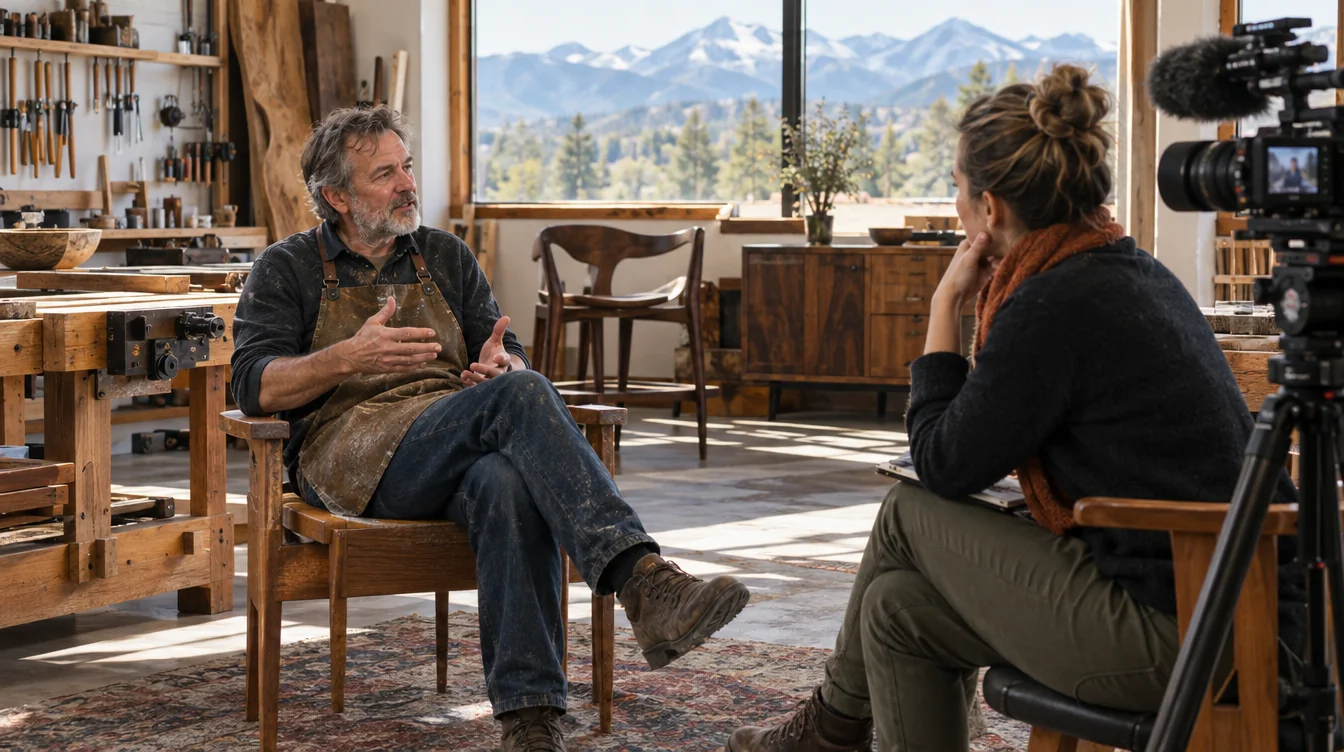
Documentary storytelling for businesses works best when it reveals something real: why the company exists, how the work is done, or what the people behind it have learned. It is more than a long commercial. A useful business documentary gives viewers a reason to care, evidence they can trust, and a clear idea to carry forward.
That makes the planning different from a standard promotional video. The strongest starting point is not “What should we say about ourselves?” It is “What can the audience understand only after meeting these people and seeing this place?”
Start with one meaningful question
A documentary needs a central question sturdy enough to guide interviews and flexible enough to allow discovery. A manufacturer might explore how a product moves from raw material to finished work. A nonprofit might show what a community problem looks like through the people living with it. A family business might preserve the decisions and values that shaped its growth.
Define the audience at the same time. A film for recruiting skilled employees needs different voices and scenes than a film for customers, donors, partners, or an internal team. Write down what viewers know before watching, what they should understand afterward, and what action the film should support. That short brief keeps the story from becoming a collection of unrelated interviews.
Choose people who can speak from experience
Credible interviews come from proximity to the story. Look for people who made decisions, performed the work, experienced the change, or can explain why a moment mattered. Titles alone do not make an interview useful. A mix of perspectives often gives the editor the contrast and detail needed to build a clear narrative.
Prepare themes and open questions instead of scripting every answer. Ask for specific moments: the first difficult week, the problem that forced a new approach, the detail customers never see, or the lesson someone would pass on. A good interviewer listens for the concrete example behind a general statement and follows it. Participants should know the purpose, intended audience, and likely distribution before recording.
MHMedia’s documentary production service can include story development, interview planning, location filming, archival material, editing, sound, graphics, captions, and delivery. The exact scope should reflect the story and the access available.
Plan scenes that prove the story
Interviews carry meaning, but images give the audience evidence and context. Build a scene list around real activity: hands performing a skilled process, a team solving a problem, the landscape around a facility, a customer-facing moment, or details that show history and craft. These scenes should add information rather than simply decorate spoken words.
Access planning matters. Identify active work areas, noise, safety requirements, restricted information, release needs, archival ownership, and the people who can approve filming. Decide what can be shown before the crew arrives. When the location, schedule, and subject matter are complex, a clear production plan protects both the story and the workday.
Drone photography and video may help establish a place when conditions and permissions allow. Graphic design, maps, titles, or archival labels can clarify time and context without overpowering the human story.
Shape one film into useful versions
Before editing, decide where the story will live. A primary film may belong on a website, at an event, in a presentation, or in a recruiting campaign. Short excerpts can introduce individual people or ideas, but every version should make sense on its own. Plan captions, aspect ratios, opening context, and calls to action for the actual channels instead of treating them as last-minute exports.
Measure the result against the film’s purpose. Useful indicators may include completion rate, visits to a related page, qualified inquiries, recruiting conversations, event response, or whether the film gives staff a consistent way to explain the organization. Record a baseline where one exists and use trackable links or campaign landing pages when appropriate. No film guarantees an outcome; measurement helps the team learn what the story supports.
MHMedia LLC is based in Evans and serves Denver, Fort Collins, Greeley, Loveland, Boulder, Colorado Springs, Cheyenne, and Laramie, with travel for larger productions. Discuss your documentary idea with the audience, access, existing material, and intended use in mind.
Your next project starts with a clear purpose.